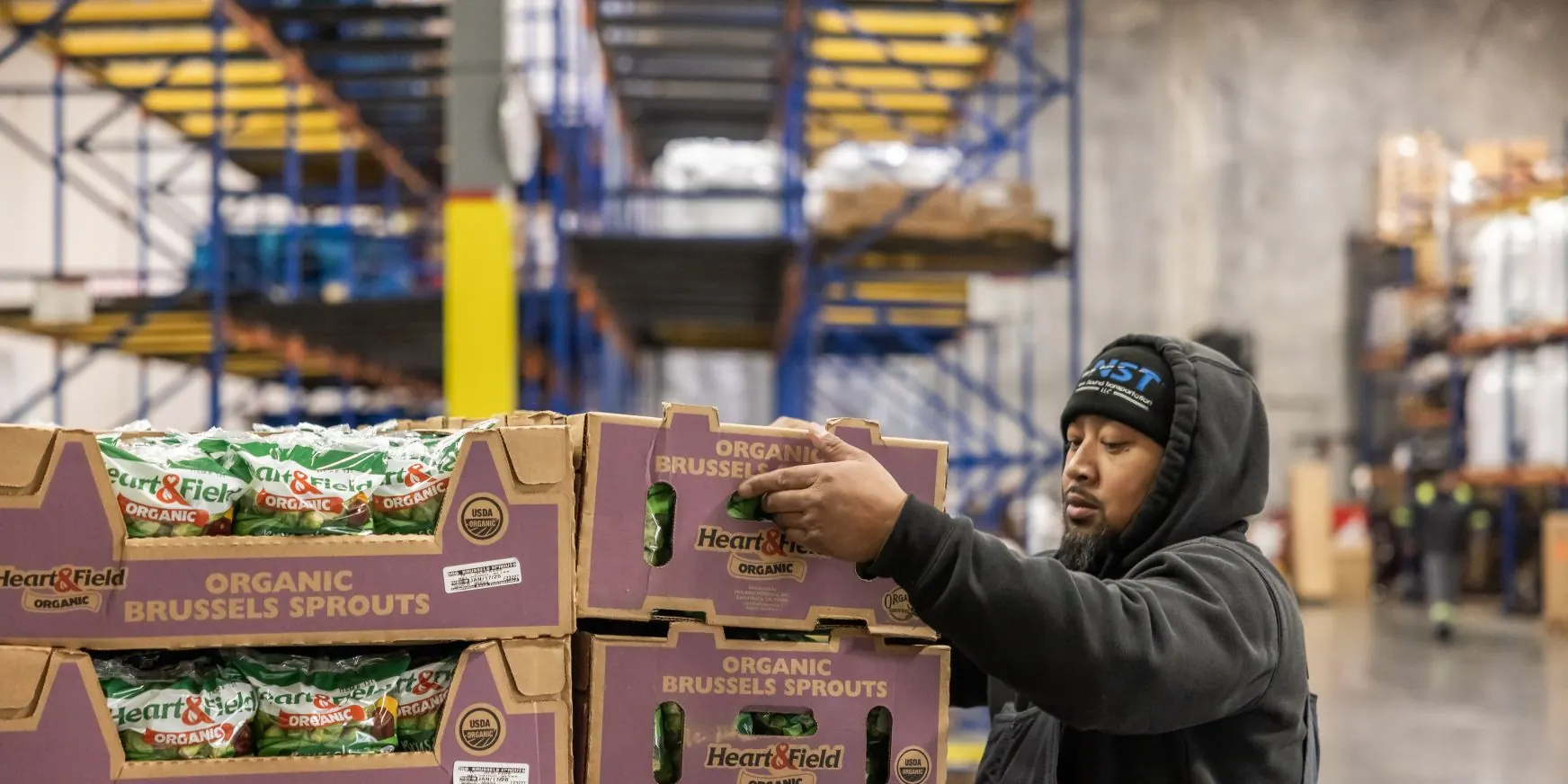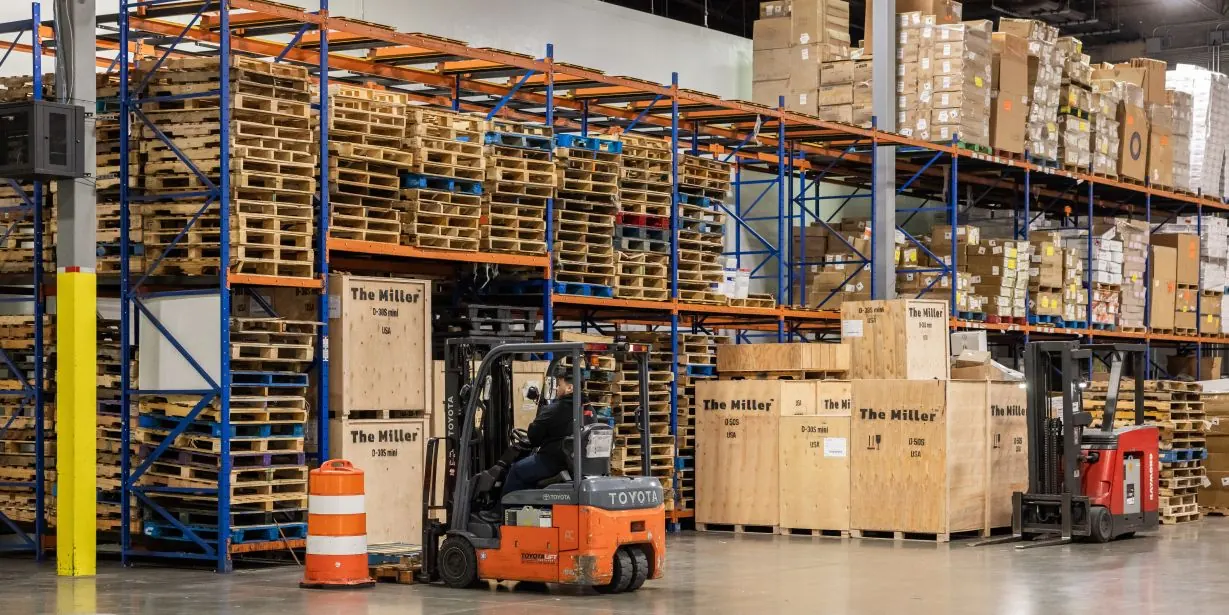
FSMA 204 cold storage traceability requirements require businesses that manufacture, process, pack, or hold foods on the Food Traceability List (FTL) to maintain Key Data Elements (KDEs) for specific Critical Tracking Events (CTEs). Covered businesses must maintain required traceability records and produce them to the FDA within 24 hours of a request, or within another reasonable timeframe agreed to by the FDA. Records do not generally have to be kept digitally, although the FDA may require certain businesses to provide an electronic, sortable spreadsheet during an outbreak, recall, or other threat to public health.
That’s a lot of acronyms, but the short of it is that compliance requires detailed lot code tracking so the FDA can trace certain foods through the supply chain quickly.
The FDA rule sets the new standards for food traceability and includes some high-risk items like:
- fresh-cut fruits
- leafy greens
- soft cheeses
- nut butters
- fresh or frozen seafood
Put very simply, the rule is all about fast recall response. Companies growing, processing, packing, holding, or shipping these goods may have traceability responsibilities depending on their role in the supply chain and any applicable exemptions. The goal is for the FDA to find the source of foodborne illnesses as soon as possible. Like leaving breadcrumbs, but not actually.
In cold storage, holding high-risk food requires strong traceability alongside physical temperature controls. If your cold storage facility can’t maintain required lot information, your shipment can face compliance risks.
Current FSMA 204 Timeline: The Food Traceability Rule originally had a January 20, 2026 compliance date. The FDA later proposed extending that date to July 20, 2028, and Congress directed the FDA not to enforce the rule before July 20, 2028. The FDA has stated that it intends to follow that direction.
Understanding Critical Tracking Events and Key Data Elements
A Critical Tracking Event is an action where specific traceability information must be captured. For cold storage and transportation operations, important events can include receiving, shipping, and, where applicable, transformation.
Key Data Elements are the specific data points you must record during these events. The exact KDEs depend on the Critical Tracking Event, but they can include:
- The Traceability Lot Code (TLC) assigned by the originator.
- Relevant dates the product was received or shipped.
- The exact product description and quantity (box or pallet count).
- Location identifiers for where the event took place.
- Traceability Lot Code source information.
Under FDA rules, required records generally must be made available within 24 hrs of an official request, unless the FDA agrees to another reasonable timeframe. In certain outbreak, recall, or public-health situations, the FDA may also require covered businesses subject to the requirement to provide information in an electronic sortable spreadsheet.
That means you should have your traceability records organized and ready to access quickly.
How Temperature Excursions Threaten Cold Chain Compliance
A temperature excursion happens when product temp levels rise above or drop below required thresholds. While FSMA 204 focuses on data tracking rather than temperature control, temperature failures can still destroy product integrity and create separate food-safety problems.
If a temp-controlled LTL load warms up during transit, bacteria can quickly grow and spread depending on the product, temperature, and length of exposure. When you receive that load at a warehouse, recording the lot number isn’t enough to determine whether the product remained safe. Temperature records, shipment documentation, and other available evidence may also be needed to evaluate what happened during transit.
How to Avoid Temperature Excursion Cold Chain Issues
To avoid temperature breaks, well-prepared operations across warehouses and trucks are needed:
- Verify Pre-Cooling: Always pre-cool trailers before loading when required for the shipment. Don’t rely on a truck trailer to cool down hot freight.
- Use Continuous Monitoring: Install digital data loggers and smart telematics on refrigerated trailers where appropriate.
- Eliminate Dock Delays: Keep dock doors sealed until trailers are backed in and chilled. Stage goods inside cold bays.
- Inspect Seals and Airflow: Ensure floor tracks and air chutes are clean so cold air circulates around every pallet.
These are cold-chain operating practices rather than requirements created specifically by FSMA 204.
Pre-Cooling vs. Pulldown Reefer
A common mistake in cold chain shipping is confusing these two:
Pre-cooling has to do with cooling the trailer interior to the needed temperature before loading cargo. This takes away the heat from trailer walls, floor, and ceiling. Pre-cooling helps ensure cold freight doesn’t absorb waste heat upon loading.
Pulldown reefer means using the reefer unit to lower the temperature of warm cargo. Standard trailer refrigeration units are generally designed to maintain product temperature, not rapidly pull down heavy masses of warm product. Trying to use a reefer unit to pull down warm freight can lead to uneven cooling and put unnecessary strain on the refrigeration system.
Food should be brought to its required shipping temperature before loading when required for the product and shipment. New Sound Transportation’s facilities handle frozen, chilled, and dry storage. We provide:
- FSMA-compliant handling
- Cross-docking
- Container unloading
- Redelivery
- Freight restacking
How to Handle Reefer Freight Claims and Cold Chain Liability
When a temperature failure occurs, determining liability requires clear proof: Was the food spoiled before loading, during transport, or inside the warehouse?
Resolving a reefer freight claim requires clean data. Modern refrigerated trailer temperature telematics can automatically capture ambient trailer temps every few minutes. Depending on the system, these logs can track unit set points, supply air, return air, and door-opening events.
These temperature records are useful for cold-chain management and freight claims, but they are not themselves a specific FSMA 204 requirement.
Managing Cold Chain Liability for Reefer Breakdowns
Time is critical when a trailer refrigeration unit breaks down on the highway. Asset-based carriers with in-house truck repair shops can perform routine maintenance to help prevent these breakdowns. When mechanical faults occur, having backup drivers and nearby cross-dock yards can help prevent total product loss.
Navigating Port Logistics: Port Drayage vs. Transloading Services
Importing and exporting high-risk perishable items can involve severe dock congestion, customs holds, and equipment shortages.
Port drayage means hauling an ocean container from a port terminal to a nearby inland facility, typically using a truck chassis. In this way, the container stays intact during movement.
Transloading services involve removing freight from an ocean container near the port and transferring it into a domestic truck trailer or local cold warehouse. Transloading perishable goods reduces ocean line container usage and gets freight moving quickly into domestic distribution networks.
Avoiding Port Demurrage and Detention Fees
There are some heavy fees when containers sit too long inside the terminal or when carrier equipment is held outside the port longer than allowed.
To reduce exposure to port demurrage and detention fees, shippers can move containers to appropriate off-terminal facilities, unload the freight, and return the carrier equipment as quickly as possible. For temperature-sensitive cargo, the freight can then move into cold storage or refrigerated domestic equipment while the next stage of transportation is arranged.
Understanding Transloading vs. Cross Docking Differences
Shippers often use "transloading" and "cross-docking" interchangeably, but they represent different goals in cold storage. The main difference comes down to how the freight is being transferred:
- Transloading: Focuses on mode or equipment changes, typically shifting ocean container freight into domestic trailers to avoid container fees and streamline onward moves.
- Cross-docking: Focuses on sorting and speed. Inbound truckloads arrive at a cold warehouse bay, get unloaded, sorted, and loaded directly onto outbound LTL delivery trucks with minimal or no storage time.
Chassis Split Fee Explanation
When moving ocean containers through port drayage, you may see a "chassis split" line item on your invoice. A chassis split fee can occur when a driver must go to one location to pick up an empty container chassis before heading to another location to pull the loaded container. Using a logistics provider with an established yard and balanced equipment fleet can help reduce unnecessary chassis splits.
Reducing Supply Chain Handoffs with NST
New Sound Transportation (NST) combines asset-based trucking, private cold storage facilities, and direct brokerage to handle refrigerated LTL freight shipping, port drayage, transloading, and cross-docking in-house.
- Unified Data: Keeping transportation and warehouse operations connected can make it easier to keep lot numbers and other shipment information associated with your product from container unloading to final redelivery.
- Asset Protection: NST operates clean, gated yards, well-maintained reefer trailers, and an in-house repair shop that keeps equipment reliable.
- Temp Control Integrity: Skilled warehouse staff follow temperature-control procedures for frozen and chilled freight.
- Rapid Resolution: NST cross-docks, restacks, or redelivers freight quickly without waiting on external contractors.
Frequently Asked Questions about FSMA 204 and Cold Storage
What foods are included in the FSMA 204 product list?
The Food Traceability List covers categories including certain fresh produce such as leafy greens, cucumbers, tomatoes, melons, and fresh-cut fruits and vegetables, along with certain soft cheeses, shell eggs, nut butters, finfish, crustaceans, molluscan shellfish, and other listed foods. Businesses should check the FDA’s current Food Traceability List to determine whether a specific product is covered.
Who is exempt from FSMA 204?
FSMA 204 includes several full and partial exemptions based on business type, size, food, and supply-chain activity. Certain small farms, some direct-to-consumer operations, some retail food establishments and restaurants, and other specific entities or foods may qualify.
Because these exemptions have specific conditions, businesses should confirm their status using the FDA’s current exemption guidance rather than assuming they are exempt.
Does FSMA 204 require temperature monitoring?
No. FSMA 204 itself focuses on traceability records. Temperature-sensitive foods may be subject to separate food-safety requirements, transportation requirements, product specifications, and cold-chain procedures.
Does FSMA 204 require electronic records?
No. FSMA 204 does not generally require traceability records to be maintained electronically. However, the FDA may require certain covered businesses to provide information in an electronic sortable spreadsheet during an outbreak, recall, or other threat to public health.
How quickly must FSMA 204 records be provided to the FDA?
Required records generally must be made available to the FDA within 24 hours of a request, unless the FDA agrees to another reasonable timeframe.
What is the main cause of temperature excursions in refrigerated LTL freight shipping?
Common causes include loading product at the wrong temperature, improper trailer airflow, long dock door delays, and mechanical reefer breakdowns during transit.